
Cast your imagination back 8,000 years. The ice sheets and permafrost from the last glacial advance are long gone; nomadic peoples from across Europe have resettled the land; and the Storegga Slide has inundated the marshes of Doggerland, creating the island now known as Britain.
In this landscape, much of the countryside is swaddled in the wildwood, an ancient forest spreading from coast to mountainside. Yet amongst this dense cloak of trees, there lay ephemeral clearings where the sunlight penetrates, perhaps as a result of the collapse of some giant oak as it finally succumbs to age; or a wildfire born of some ancient gods casually tossed thunderbolt; a winter storm tearing a grove of young trees from the ground. In these dapple glades a riot of growth explodes, pioneering species, flowers, grasses, lichens, plants unable to survive in the underdark below the canopy. Maintained for a time by grazing animals, until the relentless competition of more aggressive herbs and scrubby bushes smother them to submission, and the plot is gradually reclaim into the bosom of the wildwood.
And yet these tiny flowers, and their sun-loving insect communities do not fall extinct. No, as Ash, Beech and Oak reclaim their dominance over one small glade, elsewhere floodwaters uproots Willow and Alder; a landslip tears topsoil from a hillside; an abandoned beaver dam leads to a lake drying out. Into these new pockets long dormant buried seeds sprout, windblown spores settle, fruits and rhizomes are inadvertently transported by birds and mammals. And so over millennia these nomadic plants, like our ancient ancestors, drifted around the land, settling for a short time, and then as the environment changed, seeking out new unoccupied lots within the landscape.
But what of these plants now, in our rigidly structured human landscape of urban settlement, manicured gardens and established farming practices. They adapted, they found a home within our traditional agricultural landscape, maintaining a foothold on permanent pasture lands grazed by sheep and cattle, or upon mown meadows on impoverished soils cropped for winter fodder. Yet even these places are under strain as pasture is improved to provide more nutritious food for livestock, so the species diversity decreases, and once common plants become increasingly rare, surviving in more and more scattered locations around the nation.
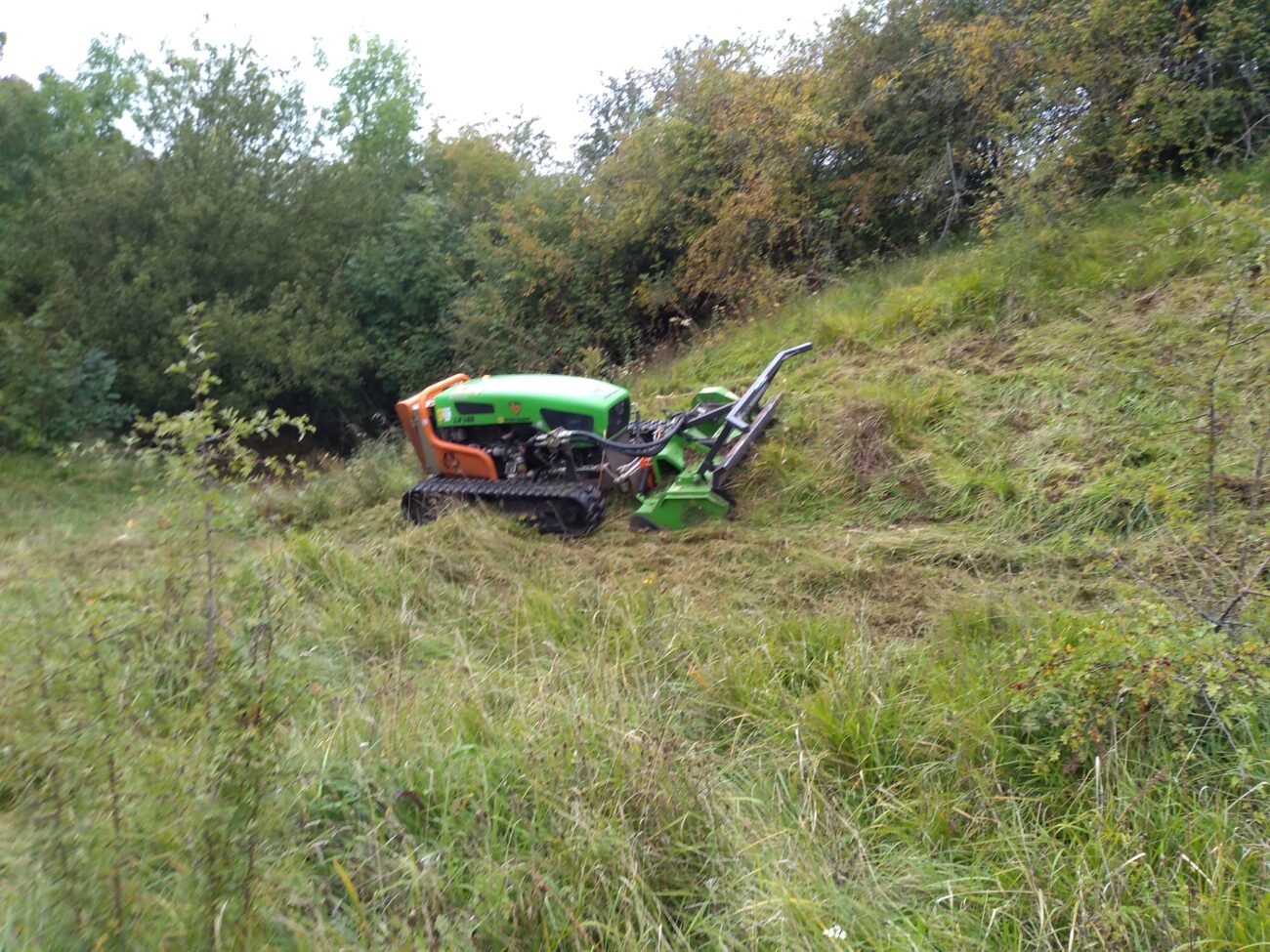
Here in Gotham we are blessed with The Sandbanks, a bounty of beauty, a pleasure to behold, and a stronghold for these rare plant communities. And that is why every year, a group of village volunteers mow the meadows on the Gotham Nature Reserve.
